China Tests First Ship-Based Cross-Domain Unmanned Cluster System At Sea
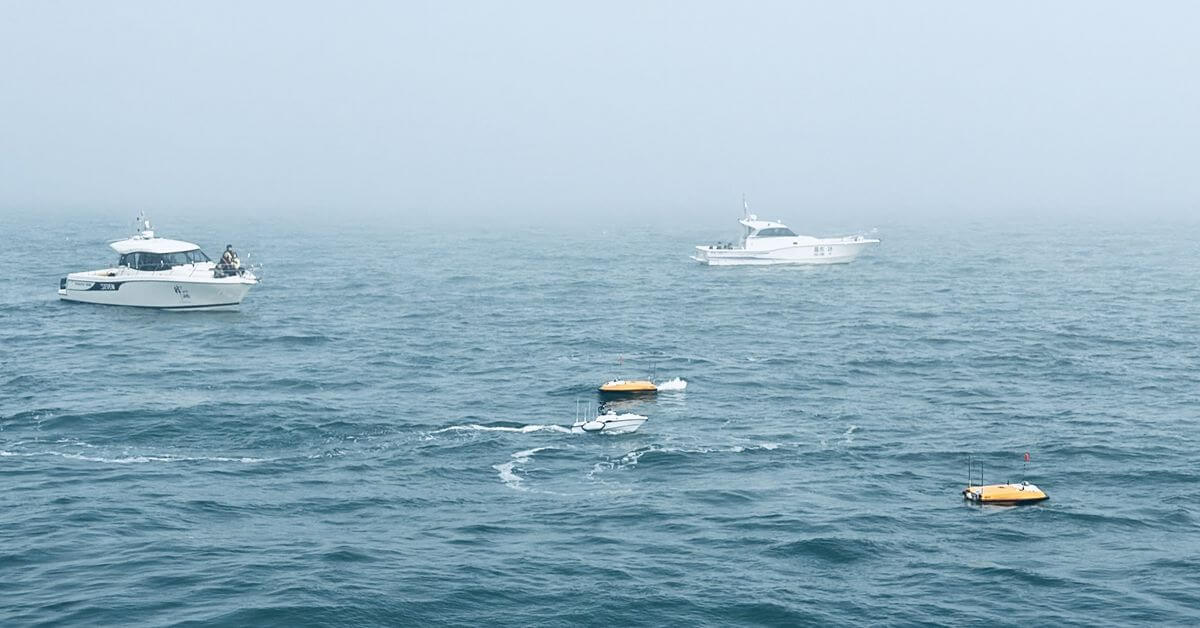
China has started testing its first ship-based cross-domain unmanned cluster system at sea.
The trials are being carried out by Dalian Maritime University aboard the research vessel Xinhongzhuan, according to a report by Science and Technology Daily.
The system combines sea, land, air, and underwater technologies into one coordinated network, with a real ship acting as the main platform.
It is the first operational setup of its kind in China. The trials began on Thursday and are being conducted as demonstration exercises at sea.
All the equipment used in the system, including drone swarms, unmanned surface vessels, and underwater robots, has been developed by the university’s research teams.
Officials said the technologies are fully owned with independent intellectual property rights.
The Xinhongzhuan serves as the central control platform for the entire system. The vessel is 69.83 meters long and is fitted with more than 15,000 smart sensors.
It is connected to shore-based control centers and can support remote operations. The ship manages task allocation and coordinates the movement of aerial, surface, and underwater unmanned systems.
Drone clusters are a key part of the system. They have a visual range of more than 10 kilometers and act as communication relays between the ship and shore.
They also help maintain links between the ship and unmanned surface vessels. In addition, the drones can be used in emergencies to deliver life buoys, medical supplies, and other items to people in distress at sea.
Unmanned surface vessels operate around the main ship and are used to monitor nearby traffic and sea conditions in real time.
They can move in coordinated formations and are able to enter shallow waters and reef areas where the main vessel cannot go. These vessels carry out detection and monitoring tasks in such locations.
Underwater robots are used for inspecting the hull of the Xinhongzhuan, conducting seabed geological surveys, maintaining underwater infrastructure, and collecting samples from the seabed.
Experts said the system shows how different unmanned technologies can work together to improve efficiency, safety, and coordination in maritime operations.
They also noted that such systems can support the development of China’s marine economy by improving how resources are used and monitored.
The development comes as China enters the 15th Five-Year Plan period (2026–2030), where marine technology and innovation are key focus areas.
Plans include improving capabilities in intelligent shipping, ocean monitoring, and marine resource development, as well as strengthening shipbuilding and marine equipment manufacturing.
China has already made progress in autonomous shipping. On February 21, the country’s first commercially operated intelligent container ship completed a full unmanned operation at Qingdao Port, covering navigation, docking, and cargo handling.
Reference: globaltimes
Want to read more?
Check out the full article on the original site