Russian Navy To Replace Entire Nuclear Attack Submarine Fleet With Yasen-Class Armed With Hypersonic Missiles
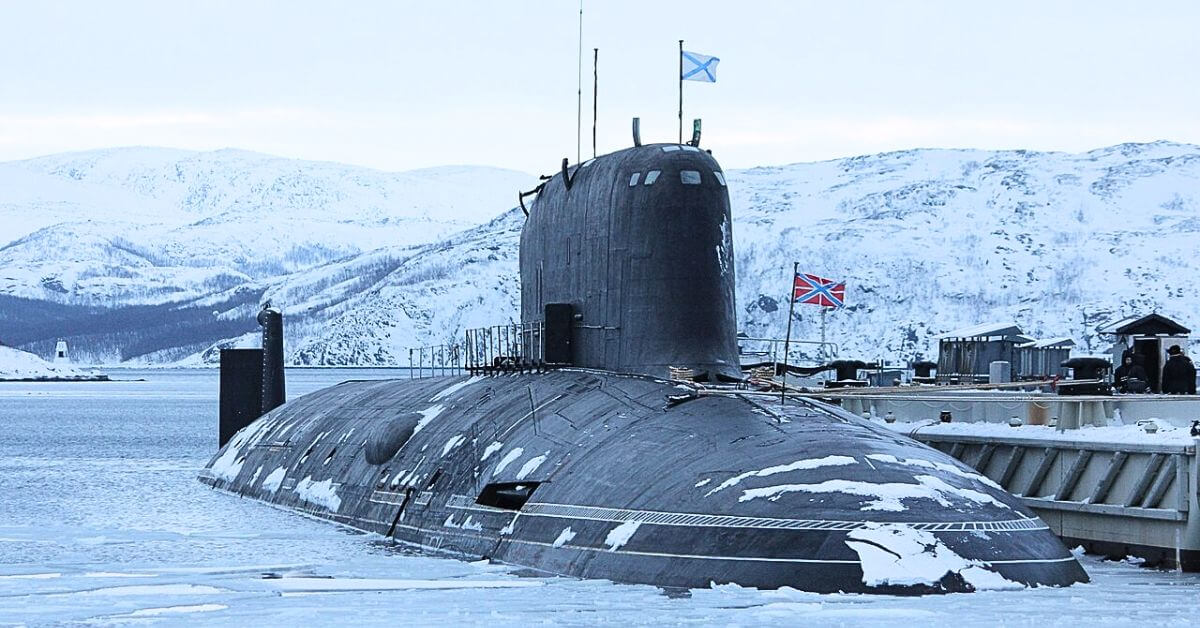
Russia has announced a plan to replace all its third-generation nuclear-powered attack submarines with newer Yasen and Yasen-M class boats over the next decade.
The announcement was confirmed on March 19, 2026, by Aleksandr Moiseyev, Commander-in-Chief of the Russian Navy.
Under this plan, Russia will retire older submarines such as the Akula, Sierra, and Oscar-II classes, many of which were built between 1985 and 1996.
These submarines have become harder to maintain due to aging reactors, outdated electronics, and different design systems that require separate logistics and maintenance setups.
The new approach replaces multiple submarine types with a single class, which is expected to simplify maintenance, reduce costs, and standardize training.
The future fleet is expected to include around 10 to 12 Yasen-class submarines. This means the total number of submarines will go down, but each unit will be more capable.
The Yasen and Yasen-M submarines are designed by the Malakhit Marine Engineering Bureau and are considered fourth-generation nuclear-powered attack submarines.
These submarines are built for multiple roles, including anti-ship missions, anti-submarine warfare, and land attacks.
A typical Yasen-M submarine has a submerged displacement of about 13,800 tons, a length of around 130 meters, and a crew of about 64. It can dive up to 600 meters, operate at around 520 meters, and remain underwater for up to 100 days.
The submarine is powered by a nuclear reactor with an output of about 200 megawatts, with a core life of 25 to 30 years, meaning it does not need refueling during that period.
In terms of speed, it can reach up to 31 knots underwater and around 16 knots on the surface. The propulsion system includes a single shaft with a low-noise propeller and two thrusters, which helps reduce noise levels.
The design also includes features such as anechoic coatings and natural coolant circulation to lower acoustic signature, making it harder to detect.
The submarines carry a vertical launch system with eight modules and can carry up to 32 cruise missiles. These include Kalibr missiles for land targets, Oniks missiles for anti-ship operations, and Zircon hypersonic missiles.
The Zircon missile is reported to reach speeds of up to Mach 9 with a range of about 1,000 km, although some Western estimates place its range between 400 and 500 km and speed between Mach 5 and 6.
Additionally, the submarines are equipped with ten 533 mm torpedo tubes placed in the midsection of the hull due to a large sonar array in the bow.
These tubes can launch torpedoes such as USET-80 and Fizik-2, as well as mines. However, reports have pointed out that some of the torpedo systems are still based on older designs and may need further development and testing.
The role of these submarines is also changing. According to the Royal United Services Institute, the Yasen-M class is being used more as a cruise missile platform rather than just a traditional hunter-killer submarine.
This means more focus on long-range strike missions instead of targeting enemy ships and submarines in close range.
All Yasen-class submarines are being built at the Sevmash Shipyard in Severodvinsk. Construction has faced delays due to supply chain issues, workforce limitations, and technical challenges.
Building one submarine can take between 8 to 15 years, and production is limited to about one unit per year or less. Costs are estimated to range from $700 million to over $1.5 billion per submarine.
As of 2026, one Yasen and five Yasen-M submarines are already in service, with more under construction, including the Perm submarine, which is expected to enter service in 2026 after sea trials.
The submarines are deployed mainly in the Northern Fleet and Pacific Fleet, covering areas such as the Arctic, North Atlantic, and Asia-Pacific.
References: 19fortyfive, idrw
Want to read more?
Check out the full article on the original site