Trump administration opens investigation into Harvard’s financial aid for international students
Our take
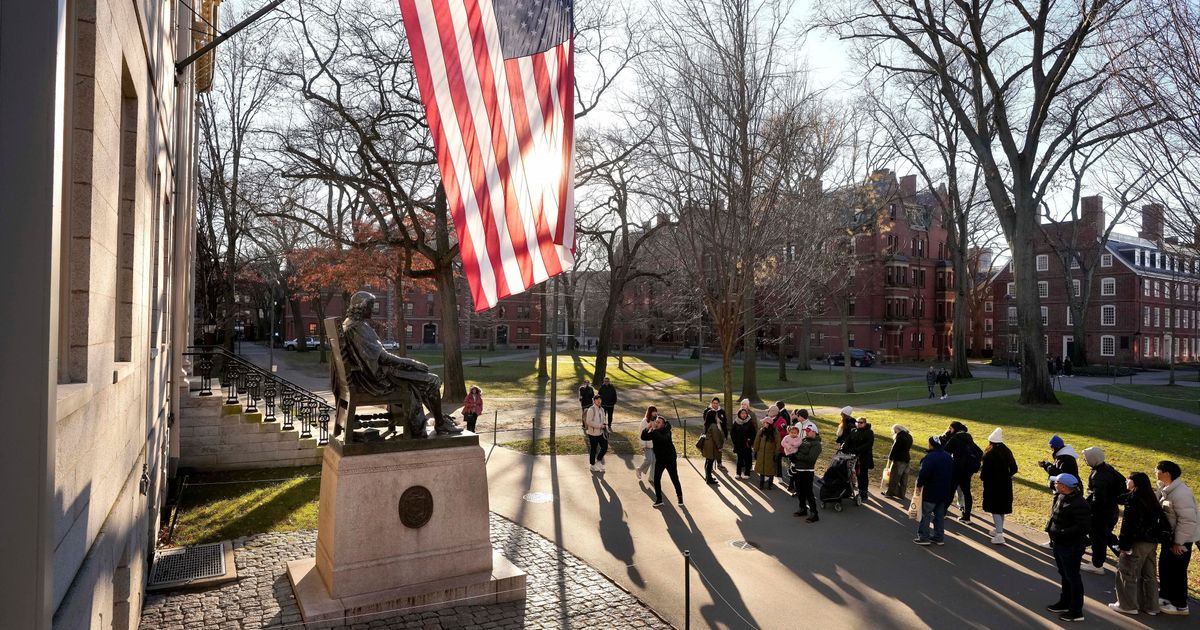
The Justice Department’s investigation into Harvard’s financial aid practices, specifically concerning potential Chinese donor influence and the exclusion of American students, lands with a heavy thud in a higher education landscape already grappling with financial instability and shifting priorities. It’s another layer of complexity piled onto institutions already navigating declining enrollment in some areas, rising costs, and increasingly precarious funding models. The timing is particularly noteworthy given recent developments like the unusual absorption of a USF campus by New College of Florida [New College of Florida Absorbs a USF Campus. Sort Of.], a move that highlights the creative, sometimes desperate, measures institutions are taking to stay afloat. And it follows closely on the heels of reports detailing the pressures facing institutions like Clinton College [Pressures Mount at Cash-Strapped Clinton College], further illustrating the widespread financial anxieties within the sector. This isn't just about Harvard; it’s about the fragility of the entire system.
The core issue—whether Harvard is effectively allowing foreign entities to dictate scholarship allocation—raises serious questions about institutional autonomy and the potential for undue influence. While international student recruitment and philanthropic giving from abroad are vital for many universities, particularly those with high tuition costs, the line between legitimate fundraising and potential compromise becomes blurred when scholarship access is explicitly restricted. It’s easy to see how this could be perceived as prioritizing international students over domestic ones, potentially undermining the core mission of many American universities to serve their own citizens. The investigation’s focus on Chinese donors is, understandably, happening against a backdrop of heightened geopolitical tensions and concerns about intellectual property theft and national security. This context undoubtedly amplifies the scrutiny and adds another layer of sensitivity to the situation, particularly considering the ongoing debate about the rise of nontraditional college students [The Rise of the Nontraditional College Student] and the need to ensure equitable access to higher education for diverse populations.
The implications extend far beyond Harvard's campus. If the Justice Department finds wrongdoing, it could set a precedent for increased oversight of university fundraising practices, particularly those involving foreign entities. It's likely to trigger a wave of self-assessment among other institutions seeking international donations, forcing them to scrutinize their scholarship agreements and ensure compliance with US laws. This could also lead to more stringent regulations governing foreign funding of American universities, potentially impacting their ability to attract international students and engage in global research collaborations. Beyond the legal ramifications, this case will undoubtedly fuel public debate about the role of universities in a rapidly changing world, and the balance between global engagement and national interests. Universities are increasingly vital hubs of innovation and research, yet they are also susceptible to pressures both internal and external which can impact their core values.
Ultimately, this investigation serves as a stark reminder of the complex challenges facing higher education in the 2020s. Financial sustainability, geopolitical considerations, and societal expectations are all converging to create a precarious environment for institutions. The question now is whether this investigation will lead to meaningful reforms that safeguard institutional integrity and ensure equitable access to education, or simply become another chapter in the ongoing saga of higher education's evolving role in American society. Will we see a broader reassessment of how universities engage with international donors, or is this merely a targeted inquiry focused on a single institution’s alleged practices?
The Justice Department is investigating whether Harvard University is allowing Chinese donors to create scholarships that exclude American students.
Read on the original site
Open the publisher's page for the full experience