The Very Powerful Men Who Think Introspection Is Dumb
Our take
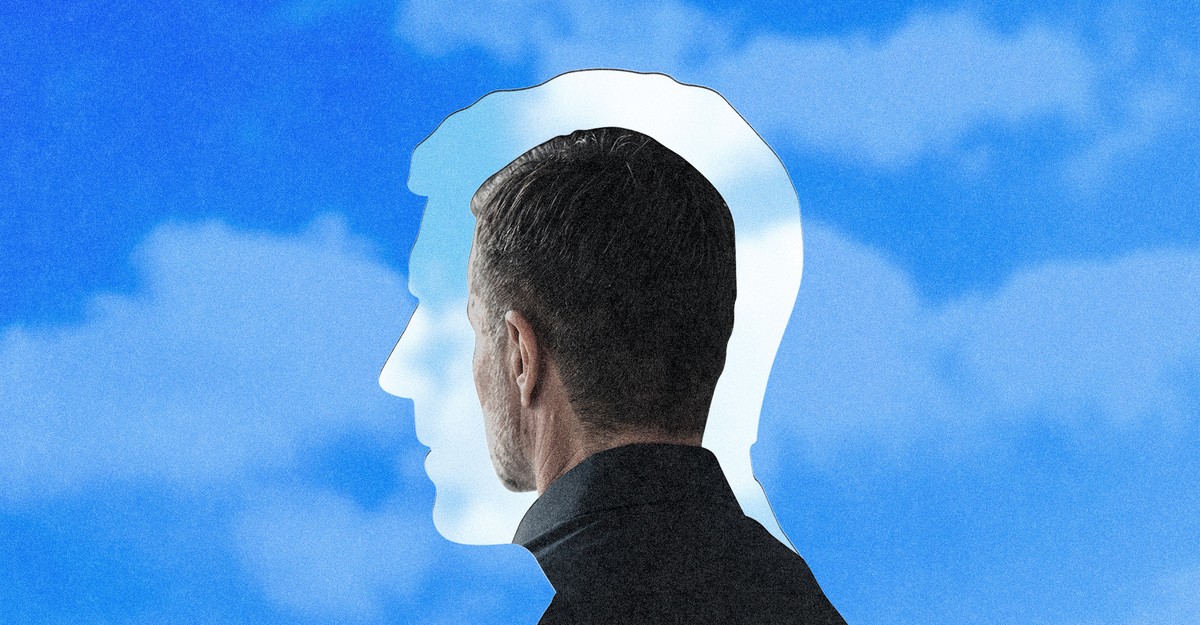
In a world increasingly dominated by tech magnates and venture capitalists, the recent reflections of William Shatner after his Blue Origin flight raise profound questions about the nature of introspection and its necessity in leadership. As documented in the article, Shatner experienced a stark emotional contrast between the desolation of space and the warmth of Earth, prompting him to advocate for a collective rededication to humanity and the planet. His poignant reflection was met with indifference by Jeff Bezos, who seemed more interested in celebrating his achievement than engaging with the gravity of Shatner’s insights. This moment encapsulates a broader issue: the disconnect between the powerful and the reflective, a theme echoed in analyses of figures like Marc Andreessen, who recently claimed a lack of introspection is beneficial for progress in technology and society. Such sentiments are troubling, as they suggest a broader cultural trend among influential leaders prioritizing action over reflection, often to the detriment of ethical considerations and societal well-being.
The dismissal of introspection by tech leaders speaks volumes about their approach to innovation and responsibility. Andreessen's emphasis on a “zero” introspection philosophy reflects a troubling trend where self-examination is seen as a hindrance rather than a tool for better decision-making. This attitude is not just a personal choice; it has ramifications for the industries they shape, from artificial intelligence to social media. The belief that action alone—without the tempering influence of self-awareness—can lead to meaningful progress overlooks the historical context in which self-reflection has fostered wisdom and ethical leadership. As highlighted in the article, even figures like Peter Thiel and Andreessen misinterpret philosophical giants like Nietzsche, reducing complex ideas to simplistic justifications for unbridled ambition.
This lack of introspection among the powerful is not merely a personal failing; it risks perpetuating a cycle of decision-making that is blind to the consequences of their actions. The article rightly points out that many of history’s most significant figures understood the importance of self-examination, often using it as a compass to navigate complex moral landscapes. For the tech oligarchs who shape our collective reality, introspection could serve as a critical mechanism for empathy, self-correction, and ethical governance. Without it, we risk creating a future where decisions are made in a vacuum, detached from their societal impact, as evidenced by the growing concerns about techno-authoritarianism and the unchecked power of these leaders. As we continue to grapple with the implications of their innovations, it is crucial to question whether the leaders defining our future are equipped with the self-awareness necessary to steer us ethically.
As we move forward, it raises an essential question: Can we cultivate a culture among our leaders that values introspection as much as action? This is particularly pertinent for students and emerging leaders who will one day step into these roles. By fostering environments that prioritize reflection alongside ambition, we may better equip ourselves to face the complex challenges of the future. It’s worth watching how the narrative around introspection evolves in tech and business and whether leaders begin to recognize the value of looking inward as a means to create a more equitable and thoughtful society. In a landscape where the stakes are higher than ever, embracing introspection could be the key to ensuring that progress does not come at the cost of our collective humanity.
William Shatner, the nonagenarian actor, stood beside Jeff Bezos in the desert, trying to explain his despair.
It was 2021, and Shatner had returned moments earlier from a voyage on one of Bezos’s Blue Origin rockets. “The contrast between the vicious coldness of space and the warm nurturing of Earth below filled me with overwhelming sadness,” Shatner would later write. “All I saw was death.” He concluded that reflecting on humanity’s relative insignificance could help us “rededicate ourselves to our planet, to each other, to life and love all around us.”
Shatner was attempting to relay these impressions to a grinning Bezos. Then the billionaire turned from him, mid-sentence, and called for a champagne bottle, which he shook and sprayed on a group of celebrating women.
The clip went viral in part, I imagine, because it seemed to confirm a widely held suspicion: America’s tech oligarchs are pathologically unreflective. From their perspective, looking inward is a waste of time better spent moving fast and breaking things, or hoovering up money and consolidating power.
[From the March 2024 issue: The rise of techno-authoritarianism]
That thesis received further confirmation earlier this month when the venture capitalist Marc Andreessen said that he engages in “zero” introspection—or at least “as little as possible.” Andreessen, a billionaire AI evangelist, was speaking to the podcaster David Senra, who enthusiastically approved. Senra explained that he had learned introspection was useless by reading 410 biographies of entrepreneurs. “Sam Walton didn’t wake up thinking about his internal self,” Senra said, referring to the Walmart magnate. “He just woke up like, I like building Walmart; I’m gonna keep building more Walmarts, and just kept doing it over and over again.”
Peter Thiel also has doubts about self-reflection. In 2024, the billionaire investor contended on Joe Rogan’s podcast that looking inward can impede action. He suggested that introspection was the stuff of hippies, who derailed American technological progress when they “took over the country” in the late 1960s.
None of these men seem to have considered the possibility that self-examination is valuable in itself. The goal has never been simply to stew, but to correct our motives, desires, and actions to avoid delusion and live ethically. Indeed, extending empathy to others isn’t even possible without first understanding ourselves. A world devoid of introspection would resemble a schoolyard full of children picking fights forever, unable to perceive how their actions affect one another.
The people who seem least interested in introspection are also those whose work is most profoundly shaping our collective reality. These are the supposed visionaries whose insatiable demand for data has disenchanted the world. They are the funders of opaque new forms of intelligence that could upend the economy or possibly exterminate us all. These are the people who most need to understand themselves. (Andreessen declined a request for an interview.)
“If you go back, 400 years ago, it never would have occurred to anybody to be introspective,” Andreessen continued on Senra’s podcast. “Great men of history didn’t sit around doing this stuff at any prior point. It’s all a new construct.” Until the early 20th century, he claimed, consequential people simply did things and built stuff. Reflection and self-criticism—“looking backward,” as Andreessen put it—amounts to a “guilt-based whammy” that comes “from Europe, a lot of it from Vienna.”
As many have pointed out to Andreessen, this is spectacularly wrong. Probing one’s own beliefs and limitations has been seen as the basis of wisdom for millennia, going back to the ancient Greek inscription on the Temple of Apollo at Delphi instructing its reader to “know thyself” and Socrates’s recognition of his own ignorance. Marcus Aurelius, the self-scrutinizing author of Meditations, was once the most powerful person in the world. Napoleon Bonaparte read and reread Goethe’s emo masterpiece The Sorrows of Young Werther. Thomas Jefferson felt tremendous guilt for reducing men to slaves. (Introspection is no guarantee of benevolence, as the examples of Bonaparte and Jefferson show, but it certainly doesn’t prevent anyone from doing stuff.)
In addition to being self-aware, some of history’s most consequential personalities have warned about the perils of failing to look inward. “The line separating good and evil passes not through states, nor between classes, nor between political parties either,” Aleksandr Solzhenitsyn wrote in The Gulag Archipelago, “but right through every human heart.” Without searching for that line within ourselves, we have scant hope of locating it in public, either.
Responding to his critics, Andreessen asked them to pick up Friedrich Nietzsche. For many readers, the German philosopher seems to advocate overcoming what he calls “bad conscience,” a sickness that emerges when repressive social norms cause us to turn our aggressive instincts inward—leading to crippling guilt and obsessive self-reproach—rather than directing them outward. In order to justify exerting their will and creating their own values, some readers reduce Nietzsche to a mantra: Act and then forget.
[From the October 2018 issue: How to live better, according to Nietzsche]
But this is a narrow, self-serving interpretation of his work. Nietzsche wasn’t merely looking for high-minded excuses for the powerful to do as they pleased. He was diagnosing the ways in which values have historically been produced and inherited, not insisting that we ignore our interior life so that we might shed all societal constraints.
I’m currently teaching On the Genealogy of Morals to undergraduates, so I’m well aware of how exhilarating Nietzsche’s thought can be to young minds who could view it as a glorified permission structure. But for a multibillionaire trying to midwife a tech revolution, misreading Nietzsche in this way is a potentially world-historical mistake.
Indeed, no small number of the country’s most consequential decision makers seem in thrall to this narrow interpretation of Nietzsche. Stephen Miller, Trump’s homeland-security adviser, channeled a farcical version of Nietzsche when he told CNN’s Jake Tapper, “We live in a world, in the real world, Jake, that is governed by strength, that is governed by force, that is governed by power. These are the iron laws of the world that have existed since the beginning of time.” In Miller’s view, burdensome government oversight and fussy international norms would seem to exemplify what Nietzsche called “slave morality”: the weak fooling the strong into acting against their own interests and nature. Yet Nietzsche was explaining how contemporary morality came to be, not advocating for half-cooked foreign policy.
Thiel, too, appears to rely on selective interpretations of Nietzsche. Earlier this month he traveled to Rome to lecture about the anti-Christ. He has argued that it may already be among us—in the form of AI regulation.
Ironically, and perhaps reassuringly, Andreessen spent the next few days after his interview compulsively tweeting about the backlash it engendered, almost as though he were reflecting. “My big conclusion from this week,” he wrote: “Introspection causes emotional disorders.” Elon Musk retweeted him, calling introspection “a recipe for misery” because it reinforces “negative neural pathways.” His advice: “Don’t cut a rut in the road.”
Nietzsche was far less categorical. He drew a poignant distinction between useful and harmful rumination, not in his famous essays but in his unpublished notes. “Healthy introspection, without undermining oneself,” he wrote—“it is a rare gift to venture into the unexplored depths of the self, without delusions or fictions, but with an uncorrupted gaze.” Andreessen might want to take a look.
Read on the original site
Open the publisher's page for the full experience