The Meme-Washing of RFK Jr.
Our take
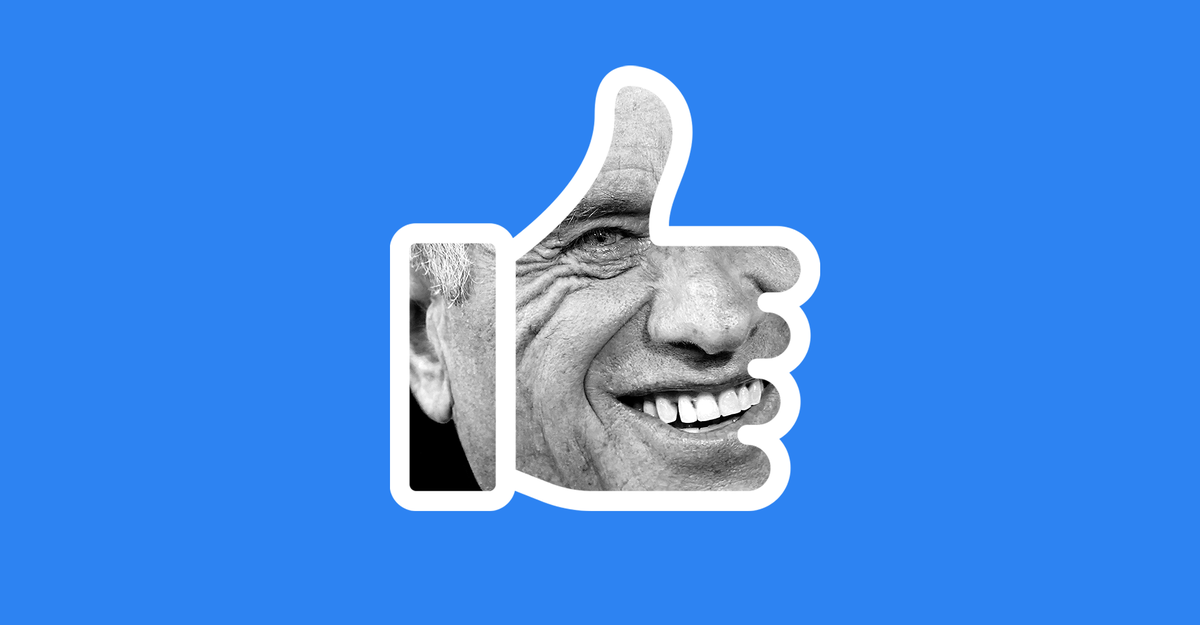
The recent viral antics of Robert F. Kennedy Jr. have taken an unexpected turn, blending the realms of political messaging and meme culture in a way that demands our attention. In an AI-generated video that has captivated millions, Kennedy body-slams a person dressed as a Twinkie, promoting his health campaign with a comedic flair that starkly contrasts with the often staid and serious nature of political discourse. This phenomenon isn’t merely an amusing distraction; it reflects a broader trend where politicians are increasingly leveraging the absurdity of social media to connect with younger audiences. As we noted in our recent piece, MAHA Has Been Given an Impossible Task, the political landscape is shifting towards a more meme-centric approach, with Kennedy’s efforts standing out for their unabashed humor and self-awareness.
Kennedy’s meme campaign is particularly noteworthy in its contrast to the often aggressive and fear-based messaging we’ve seen from other political figures, especially during the Trump administration. Where others have resorted to divisive tactics, Kennedy’s lighthearted approach, as demonstrated by his antics with Kid Rock and AI-generated clips promoting a healthy lifestyle, positions him as a more approachable figure. This contrast in tonality is significant; it could suggest a strategic pivot toward appealing to a health-conscious and younger demographic that values authenticity and relatability. The humor embedded in Kennedy's campaign can serve as a vehicle for discussing serious public health issues, even if the actual implementation of his health policies remains in question.
However, the effectiveness of this meme-washing is complicated by the underlying realities of Kennedy's political agenda. While his memes promote a message of healthy eating and active living, they also conveniently sidestep the more contentious aspects of his role, particularly his controversial stances on vaccines. As highlighted in the article, there is a noticeable absence of memes addressing his anti-vaccine advocacy, which remains unpopular across the political spectrum. This selective messaging raises important questions about authenticity in political communication. Are we witnessing a genuine attempt to engage with public health, or a calculated effort to distract from more divisive issues? The implications of such an approach could either enhance Kennedy's appeal or ultimately backfire, depending on public perception and media scrutiny.
As we look to the future, the question remains: can Kennedy effectively bridge the gap between meme culture and meaningful policy change? His current focus on promoting a healthy lifestyle resonates with a significant portion of the public, but without tangible results—like the promised bans on harmful food dyes—his meme-driven persona may be seen as little more than entertainment. The challenge for Kennedy will be to translate the viral success of his memes into substantive policy achievements that align with his campaign promises. As the conversation around health and wellness continues to evolve, we should keep an eye on whether this meme-centric strategy can yield real-world impacts or if it will fade into the background noise of political campaigning.
Millions of people have watched Robert F. Kennedy Jr. body-slam a man dressed up as a Twinkie. In an AI-generated video that Kennedy posted to X last week, he walks into a wrestling ring—shirtless, shredded, wearing his signature blue jeans. His opponent is smiling and holding a sign that reads I ♥️ Junk Food before Kennedy plants his foot into the Twinkie’s chest and suplexes the oversize treat into the mat. After a barrage of punches, kicks, and throws—all set to a Limp Bizkit song—the 72-year-old flexes his muscles while flames shoot out around him.
America’s health secretary has been on a meme blitz. Last month, the real-life Kennedy stripped down to his jeans to pump iron, cold plunge, and drink whole milk with Kid Rock. Thanks to AI, Kennedy has also been depicted as a character in the Nintendo game Super Smash Bros. who launches a frosted donut into oblivion, and as an action figure complete with “waterproof jeans” who protects kids from artificial food dyes. On Christmas Eve, Kennedy posted an AI-generated clip in which he calls Santa Claus to persuade him to put down the cookies, jump on the treadmill, and start chugging whole milk.
The memes are PSAs made for the TikTok age. Many of them explicitly mention Kennedy’s new slogan: “Eat real food.” They are absurd, juvenile, and, one has to acknowledge, pretty funny in their commitment to the bit. Many politicians have turned to memes to spread their message in ways that come off as embarrassing or out of touch (Hillary Clinton once urged her fans to “Pokémon Go to the polls”). But Kennedy—or his team, at least—seems to recognize the advantages of being in on the joke. A crusading 72-year-old with a six-pack, let alone one who works out in jeans, makes for prime internet silliness.
The recent memes are reportedly conceived of and made by a group of young staffers. Liam Nahill, Kennedy’s 26-year-old digital director, had a donut slapped out of his hand by Mike Tyson for one video. The approach is especially notable in the context of the Trump administration’s broader hunt for virality. The White House and other agencies have leaned into using social media to double down on the president’s antagonistic messaging—attacking opponents and making cruel jokes about volatile political issues such as war and mass deportations. The White House’s official X account has recently tried to promote the war in Iran by splicing footage of missile strikes with clips from Call of Duty and Wii Sports. Last year, the White House shared the image of a sobbing immigrant in handcuffs and turned it into an AI cartoon; Border Patrol posted a video of immigrants in shackles set to the song “Closing Time.”
[Read: The gleeful cruelty of the White House X account]
Kennedy’s memes, while over-the-top, offer a much more sanitized message: Be healthy. (At least, as far as Kennedy would define healthiness.) “The tonality of it doesn’t have quite the same emphasis on dominance, control, and fear,” Donald Moynihan, a professor at the University of Michigan who has written about the Trump administration’s approach to social media, told me. The memes are clearly invested in portraying Kennedy as an avuncular, larger-than-life cartoon hero. The health secretary moonlights as a falconer and follows a “carnivore diet.” In January, the HHS X account wished Kennedy a happy birthday by posting a photo of him cutting into a steak adorned with birthday candles. In the meme of Kennedy as an action figure, he changes from a suit into jeans to go rescue a peregrine falcon.
What Kennedy’s memes are not addressing is telling. Since taking office, Kennedy has attempted to dramatically rejigger America’s vaccine system. Though those efforts have recently been met with legal resistance, the result has been a kind of vaccine purgatory, in which it’s unclear who exactly is setting the country’s immunization policy. Kennedy’s meme campaign is happening at the same time that the Trump administration is reportedly trying to rein in the secretary’s anti-vaccine advocacy ahead of the midterm elections. Late last year, a prominent Republican pollster published a memo stating that “vaccine skepticism is bad politics.” It’s likely not a coincidence that there are no HHS memes about measles or autism.
Emily Hilliard, an HHS spokesperson, did not answer questions about strategies to divert attention away from Kennedy’s anti-vaccine efforts. “Secretary Kennedy is the most-followed Cabinet Secretary in the Administration across all platforms,” Hilliard told me in an email. “Our content is designed to reach broader audiences, meet people where they are, and reinforce practical, everyday steps.”
While Kennedy’s anti-vaccine views remain unpopular, his critiques of the food supply have broad bipartisan support. A February poll found that nearly 70 percent of Americans think the government should do more to discourage unhealthy eating. On that front, however, Kennedy and his team haven’t actually accomplished much. The health secretary came into office pledging to “end the chronic-disease epidemic,” but several of the policies he promised—such as removing ultra-processed foods from school lunch—are not even within his purview as health secretary. In a YouTube video posted shortly before he was picked to lead HHS, Kennedy decried the fact that America hadn’t yet banned certain artificial food dyes, promising that “President Trump and I are going to stop the mass poisoning of American children.” Instead of eradicating synthetic food dyes, which is within his purview as health secretary, Kennedy has focused on using his bully pulpit to pressure food companies to voluntarily remove them.
[Read: America’s convenience-store conundrum]
Amid prodding from the secretary, some food companies have said they will do so, but many of those pledges do not go into effect until next year or later. Doritos is one the few brands that has already introduced dye-free versions of its chips, and yet the company also still sells the bright-orange version. Although the administration has also released new dietary guidelines, telling people to “eat real food” and getting them to actually do so are separate challenges entirely.
This middling progress—the actual work of government, of public service—is obscured by Kennedy’s online persona. Twinkies might still be on supermarket shelves, but the health secretary will meme his way to the notion that he is laying the smackdown on the junk-food industry nonetheless.
Read on the original site
Open the publisher's page for the full experience