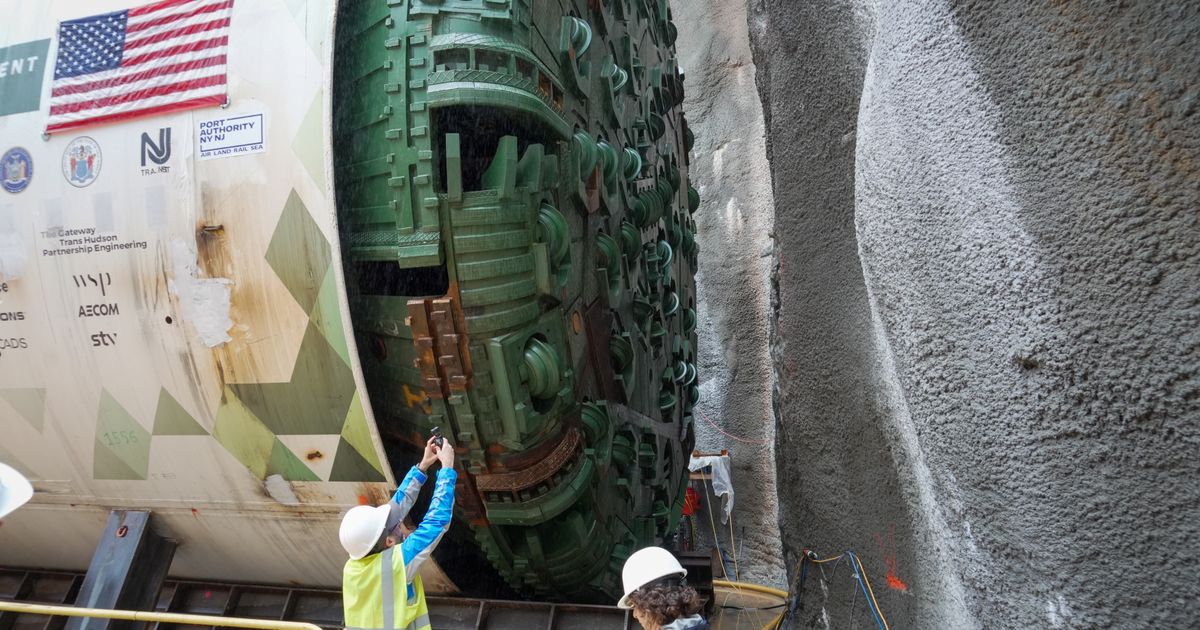
A giant drill is chewing into rock under the Hudson River, and that is genuinely good news for anyone who has ever been stuck on a delayed train. The new tunnel connecting Manhattan and New Jersey is the kind of big, boring infrastructure project that does not make headlines often, but it is exactly the kind of work that makes daily life less frustrating for thousands of people. It is also a sharp contrast to the kind of news we are used to seeing out of our own state, where WA sends $7.45M to help towns rebuild after floods and fires and WA's housing rules are pricing out the people they're meant to help. One region is building forward; the other is still playing catch-up.
Our take is simple: this tunnel project is a reminder that real progress is rarely flashy. It is a machine that spins underground for years, moving dirt and rock so that someday a train can move people. That is practical, grounded work, and it deserves more attention than the political drama that usually fills the news cycle. The drill is not a solution to every transit problem, but it is a solution to a specific one: too many people, too few crossings, and a bottleneck that wastes time and money every single day.
What this means for us in the Pacific Northwest is a question worth sitting with. We are watching New Jersey and New York invest in a tunnel that will take years to finish, while Washington is writing checks to fix damage from floods and fires that keep getting worse. Those are not unrelated problems. The same kind of forward-thinking, boring-in-a-good-way planning that builds a tunnel under a river is the same kind of planning that could build housing faster or reinforce a town against the next wildfire. Instead, we are stuck in a cycle of reacting, and the article about donor pressure silencing a genocide reference at Stockton shows how easily real conversations get derailed by money and fear.
The concrete point to watch is this: the tunnel is being built because people in charge decided the cost of doing nothing was higher than the cost of a massive drill. That is the kind of math we need more of. Whether it is transit, housing, or disaster preparedness, the question is always the same. Are we willing to pay now, or are we going to keep paying later?